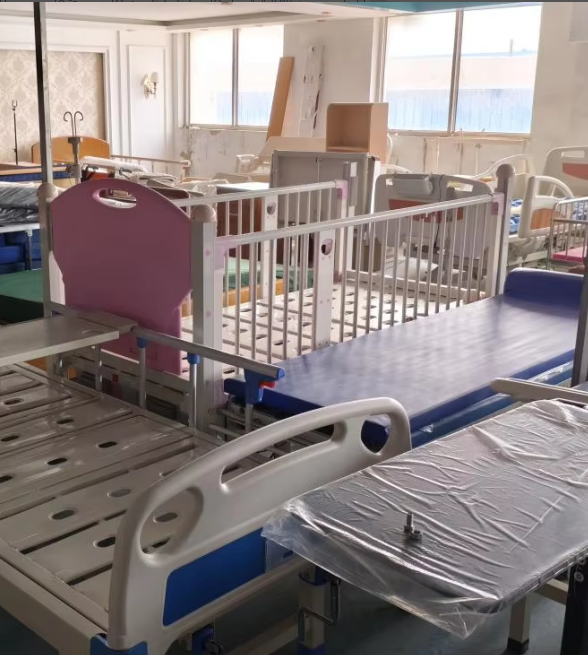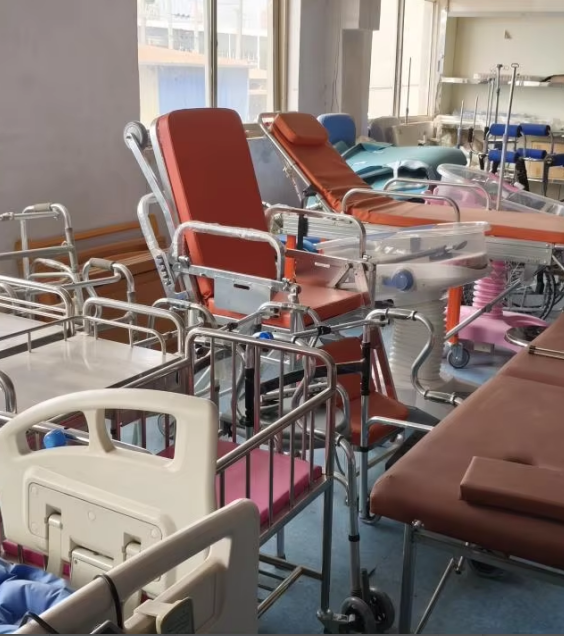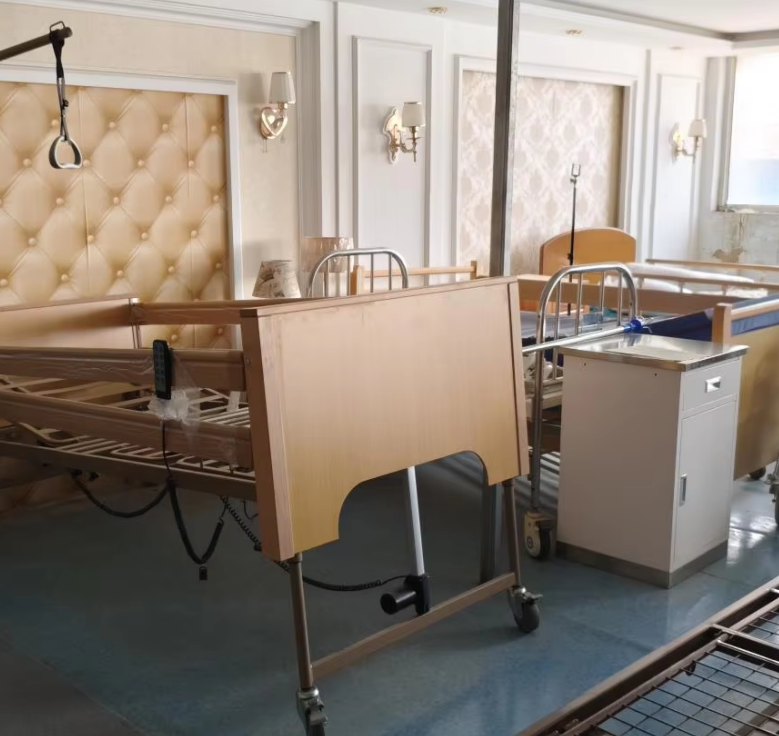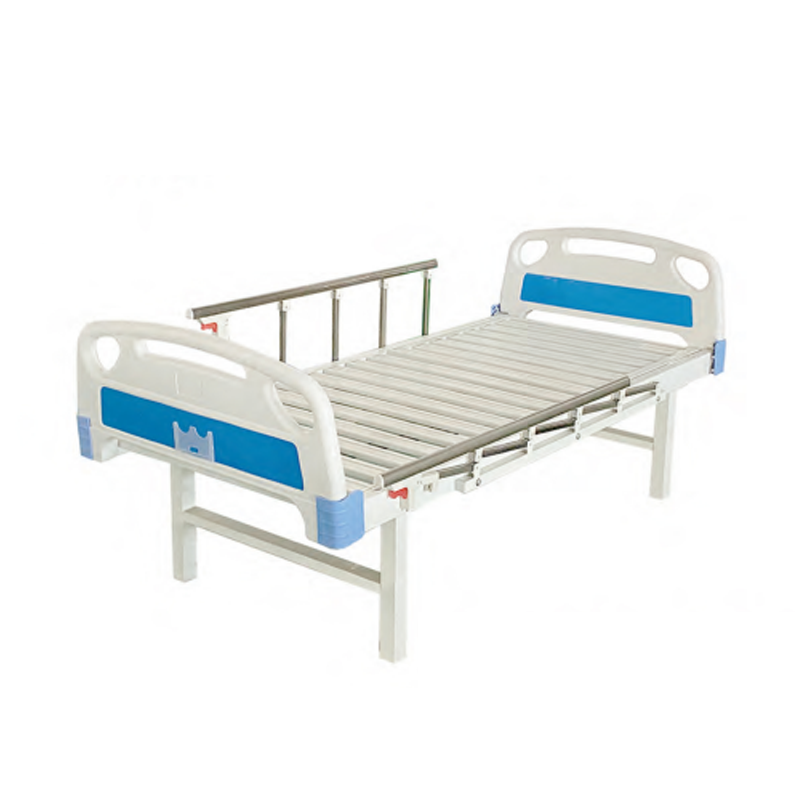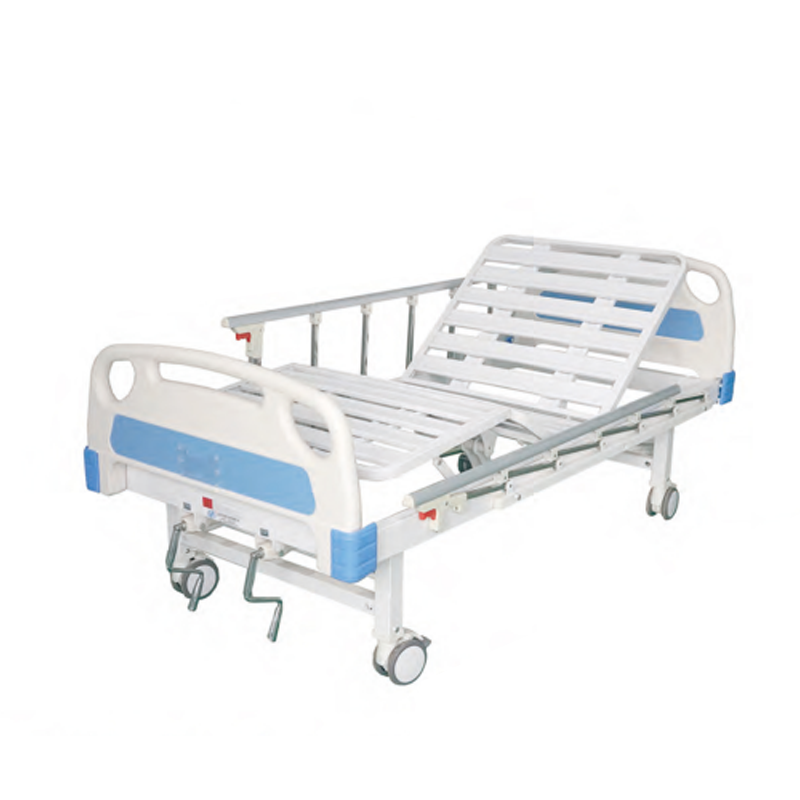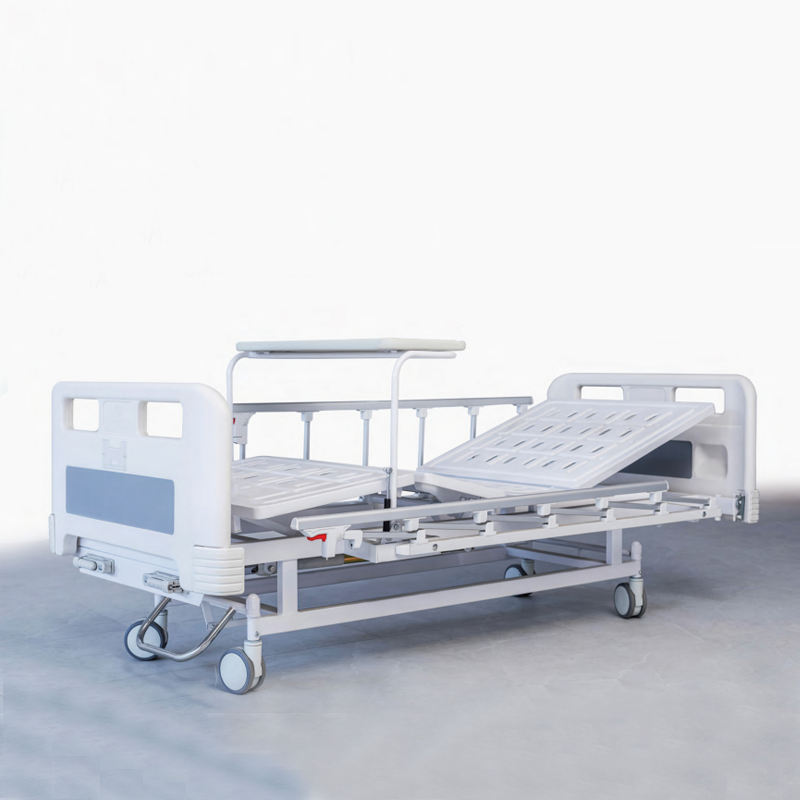

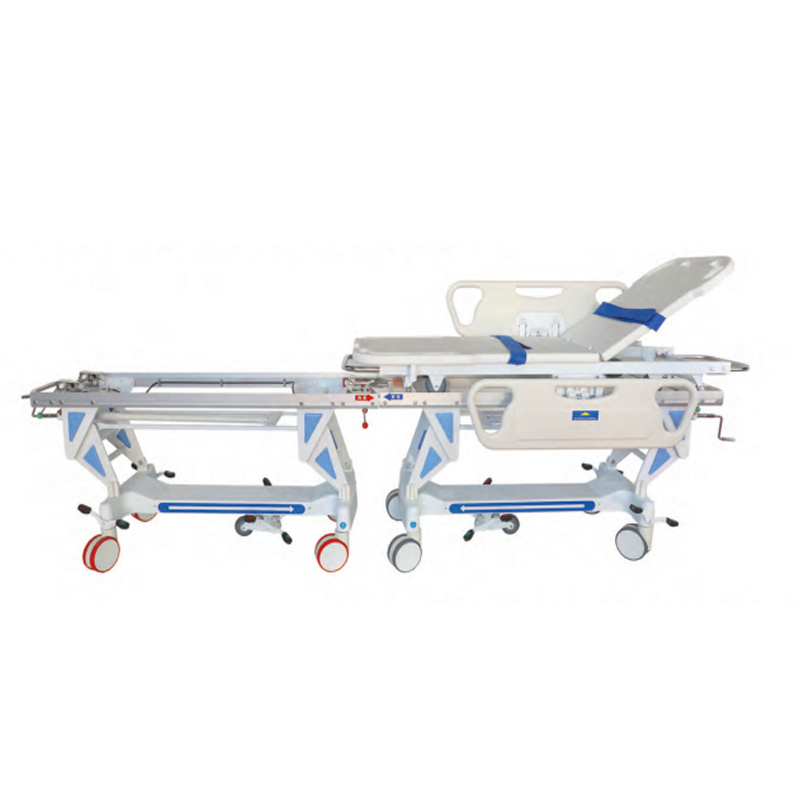
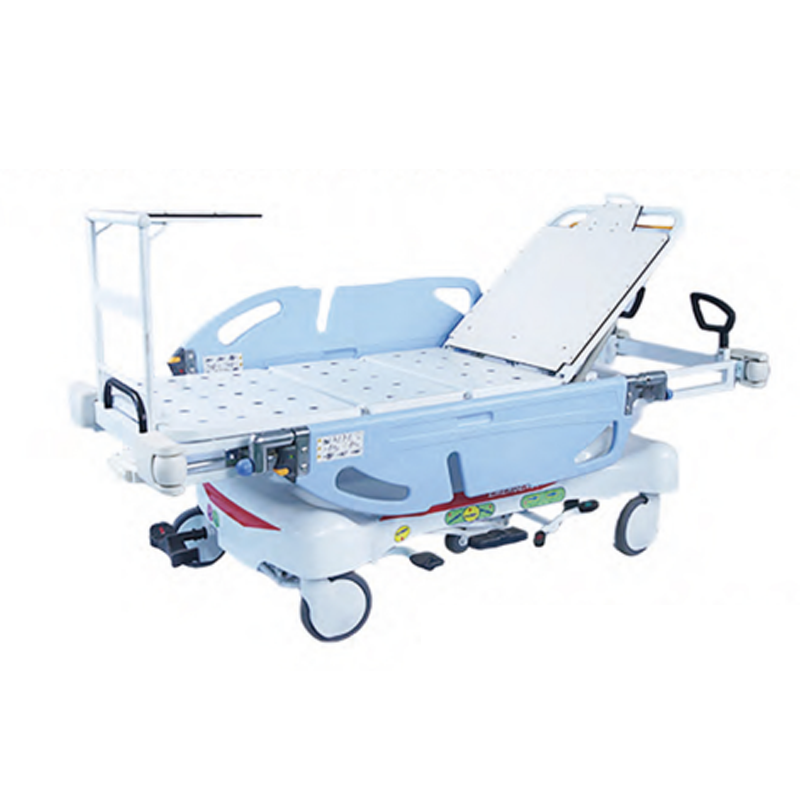
A manual hospital bed with a tilt function, offering capabilities such as Trendelenburg and reverse Trendelenburg positioning, provides significant therapeutic benefits through a non electric, manually operated system. The tilt function allows the entire bed frame to be inclined, either foot down (Trendelenburg) or head down (reverse Trendelenburg), while maintaining the patient's body in a rigid plane. This is distinct from the articulation of the head and foot sections. Manual operation is typically achieved through a dedicated crank or lever. The Trendelenburg position is used in clinical situations to increase venous return to the heart, manage shock, or during certain surgical procedures. The reverse Trendelenburg position aids in improving respiratory function, reducing intracranial pressure, and is often beneficial for patients with gastroesophageal reflux disease (GERD). This feature, combined with standard head and foot articulation, offers caregivers a powerful tool for enhancing patient comfort and addressing specific medical conditions without the need for electrical power. It is a cost effective and reliable solution for critical care settings, post operative recovery rooms, and any medical environment where precise patient positioning is crucial for physiological management, demonstrating a commitment to versatile and therapeutic patient care.