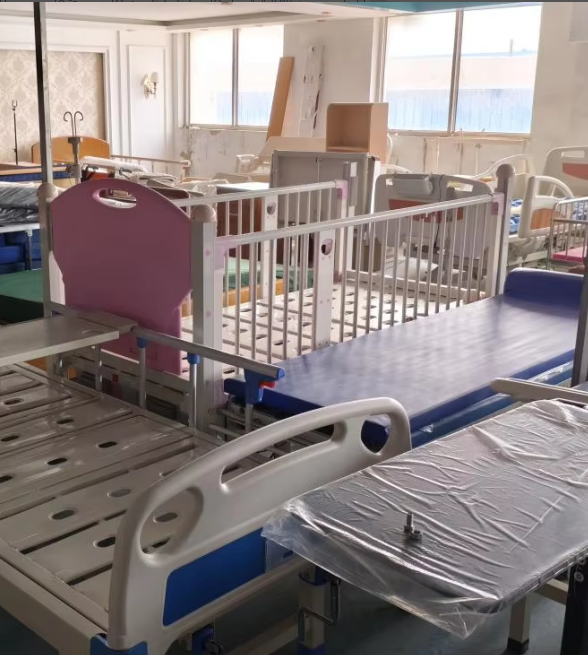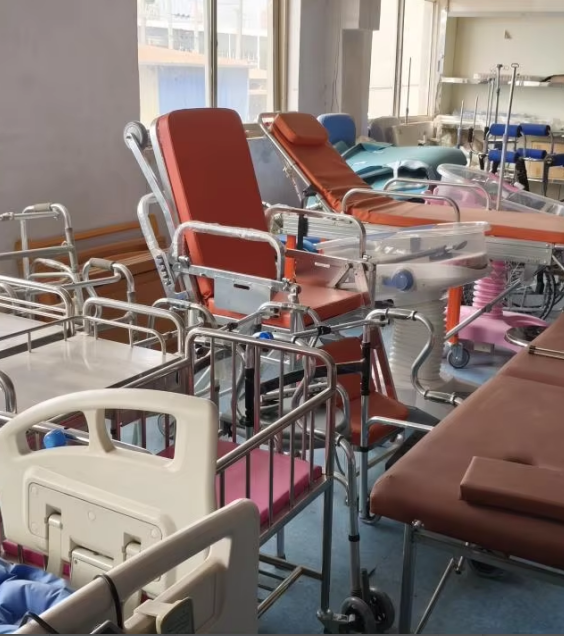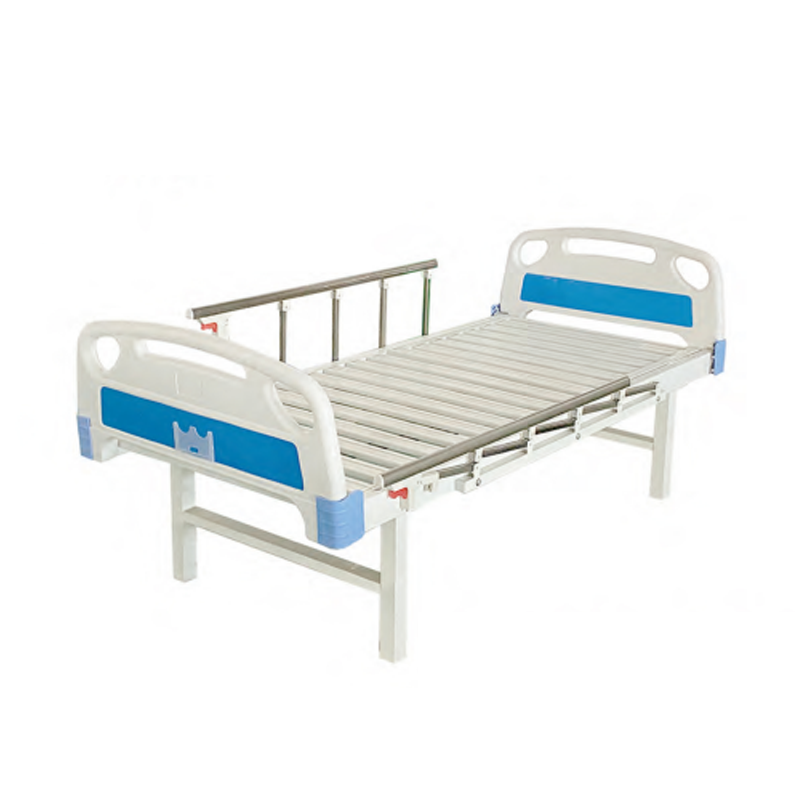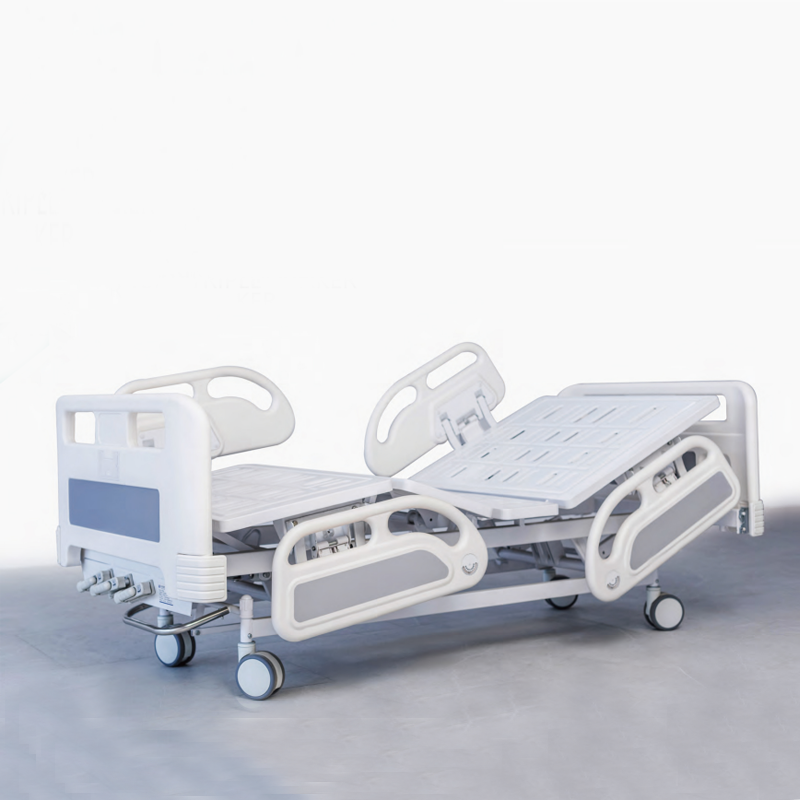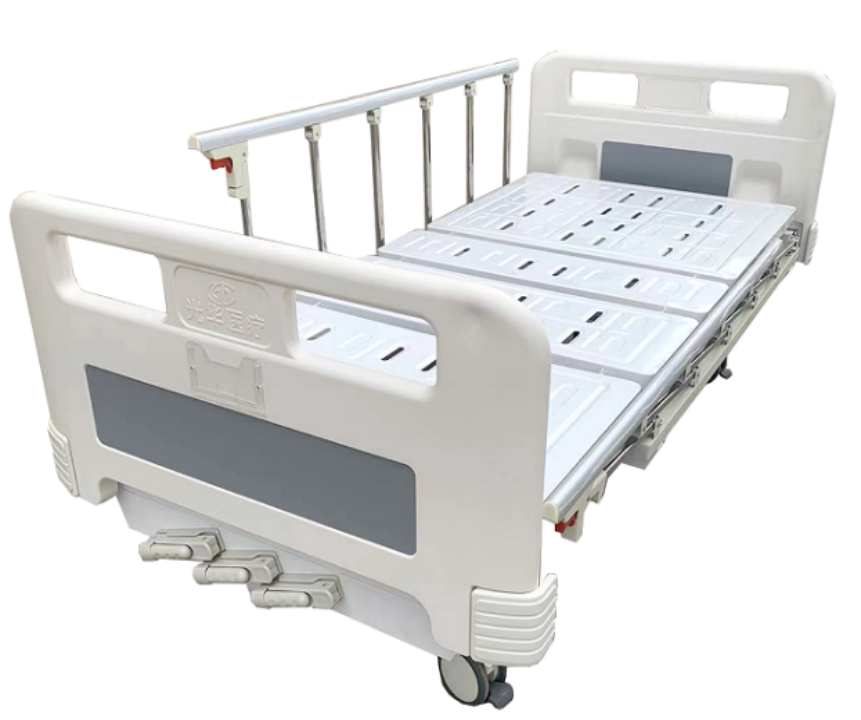

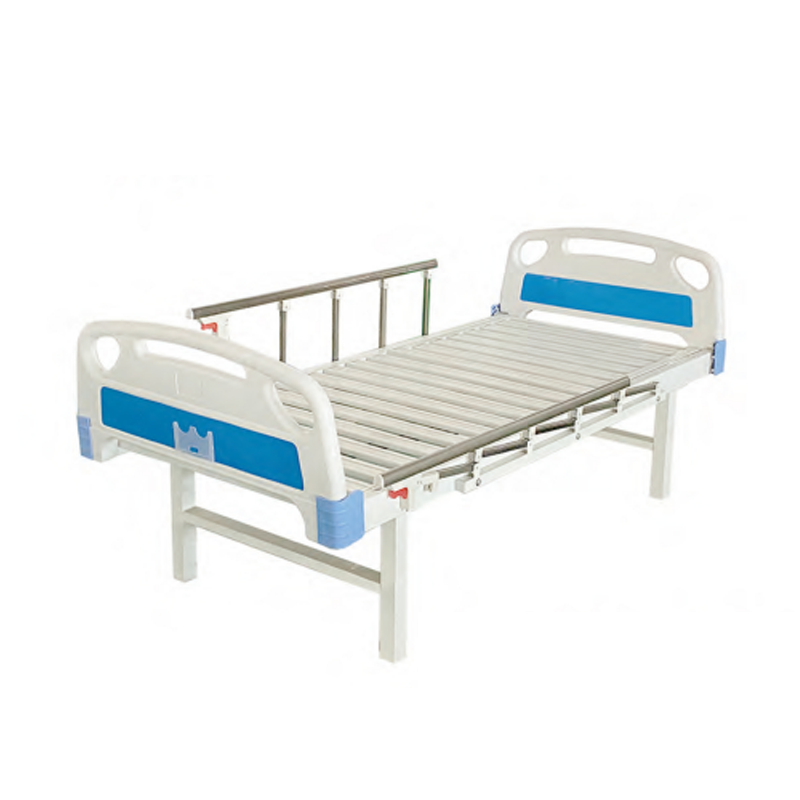
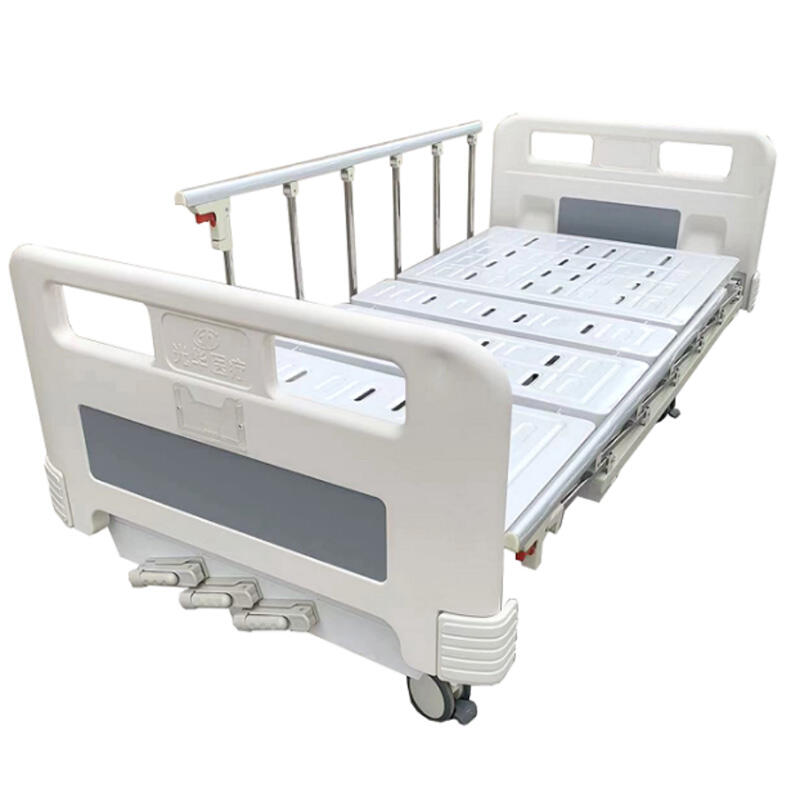
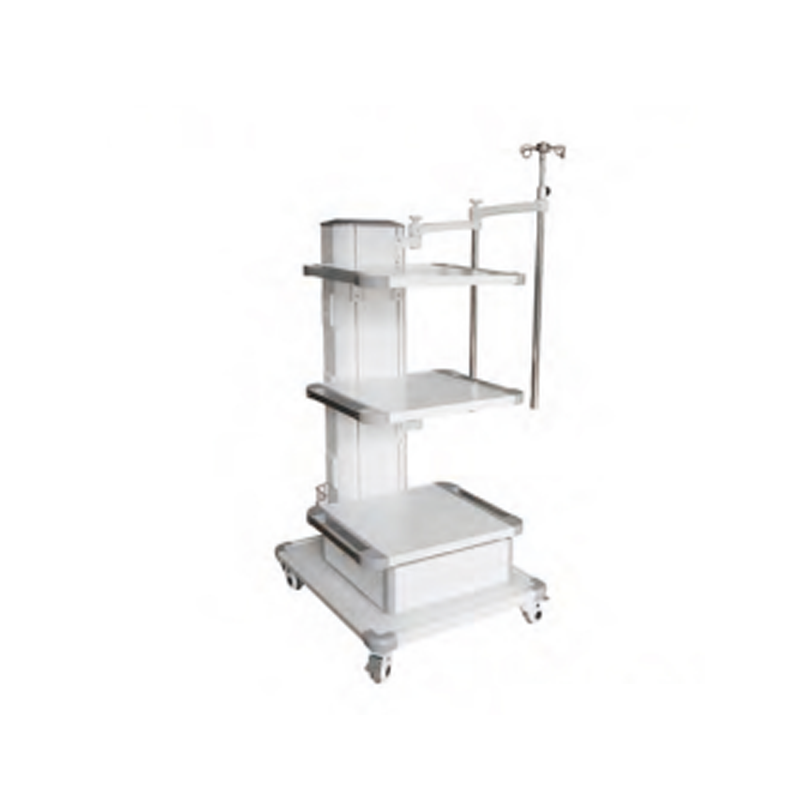
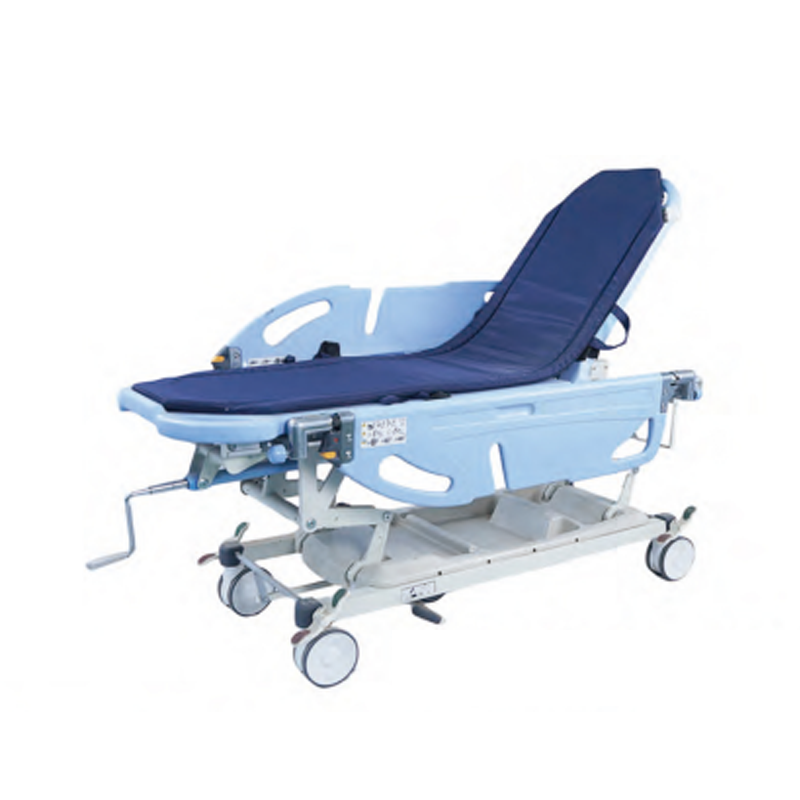
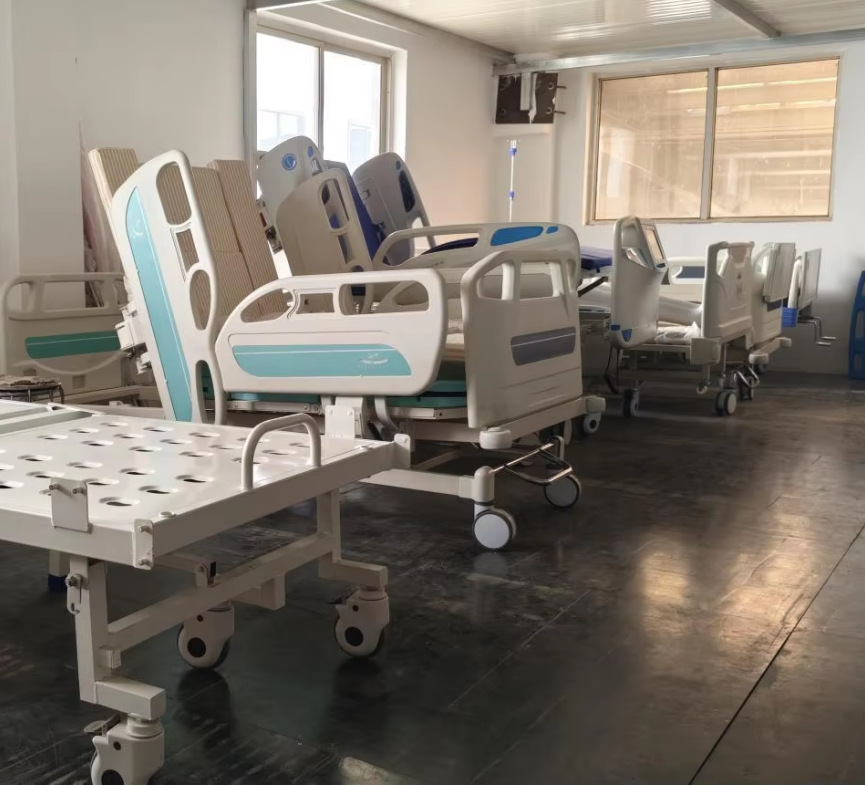
A manual hospital bed equipped with an IV pole is a practical and essential configuration designed to enhance the efficiency and organization of intravenous therapy management at the patient's bedside. The IV pole is strategically integrated into the bed's frame, typically at the foot end or the sides, and is engineered for stability to prevent tipping, even when supporting multiple infusion pumps and fluid bags. This integrated design eliminates the need for separate, standalone IV poles that can clutter the room, become trip hazards, and be easily knocked over. The pole is often adjustable in height and may feature multiple hooks to accommodate several IV bags simultaneously for patients requiring complex fluid or medication regimens. Its proximity to the patient ensures that IV lines remain untangled and at an appropriate length, reducing the risk of line tension or accidental dislodgement. The bed maintains its core manual functionality, with hand cranks for adjusting the head and foot sections, allowing caregivers to position the patient comfortably for procedures or for the patient's own comfort without compromising the IV setup. This combination of a positioning bed and a secure IV delivery system streamlines the workflow for nurses, centralizes critical care equipment, and contributes to a safer, more organized patient care environment in hospital wards and clinics.