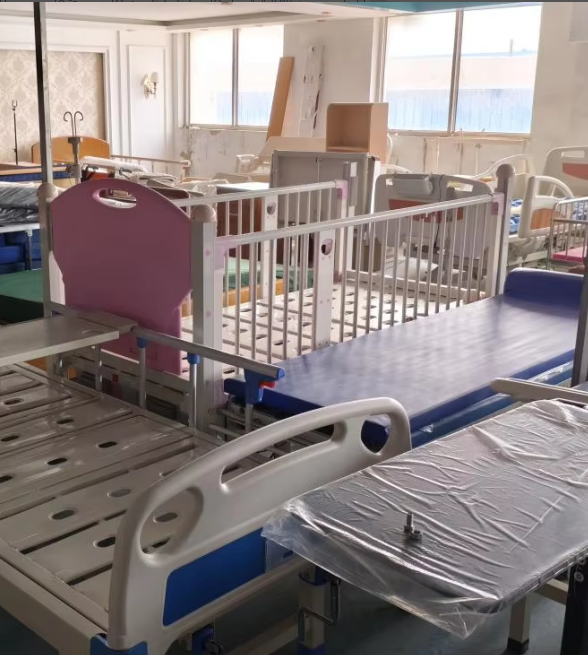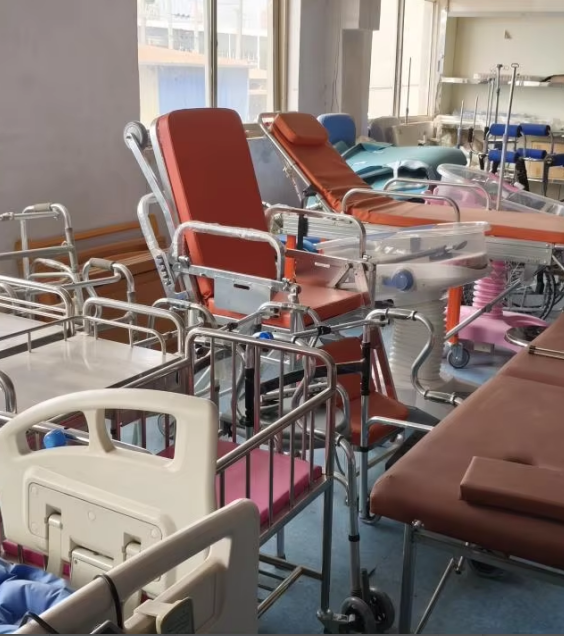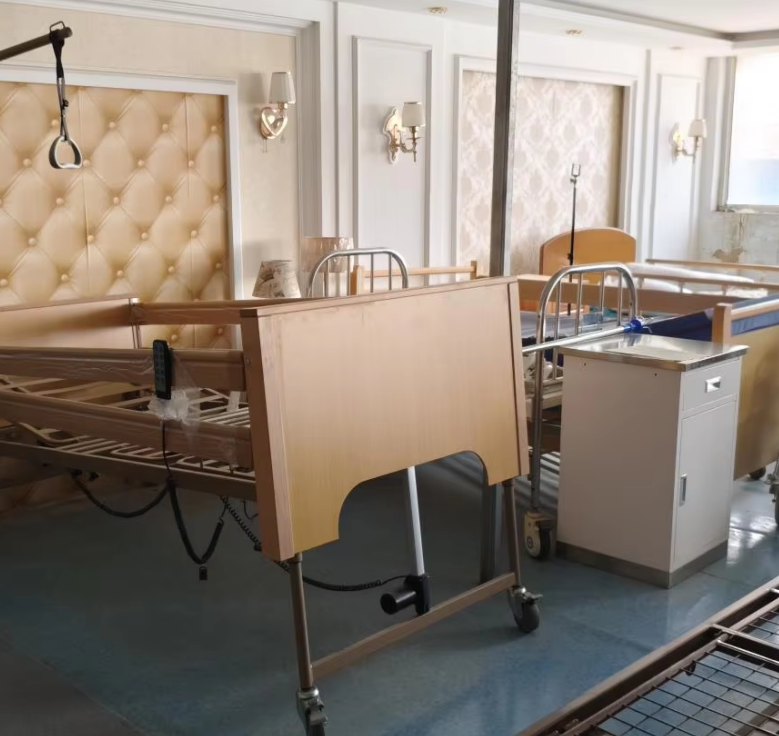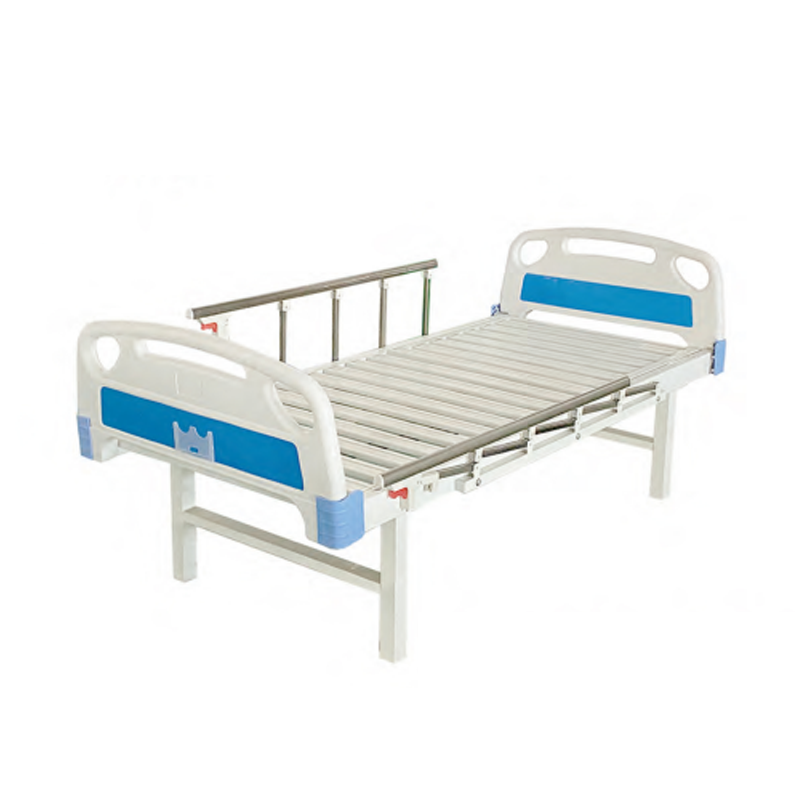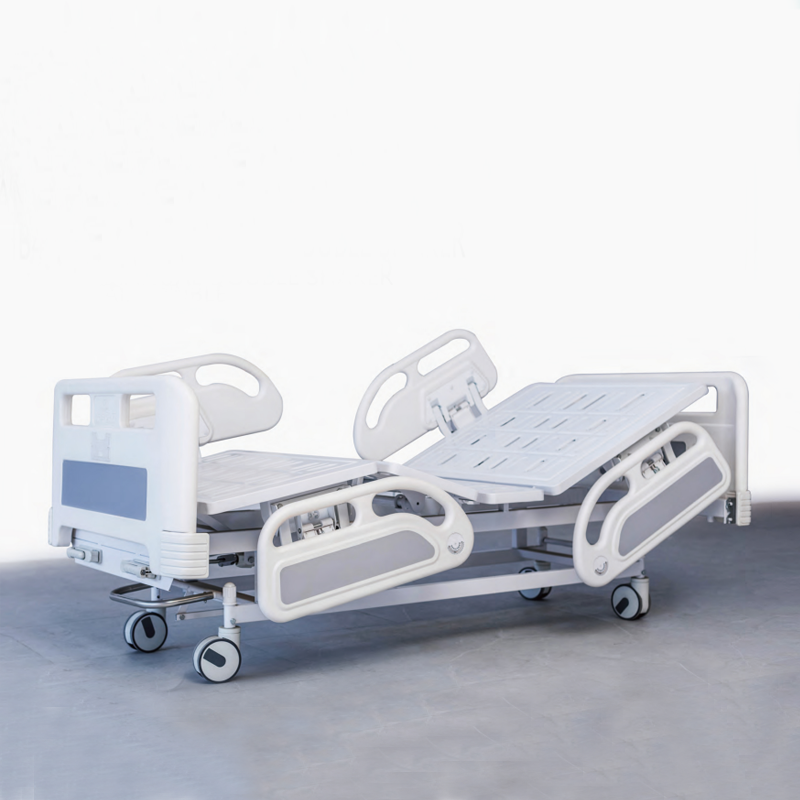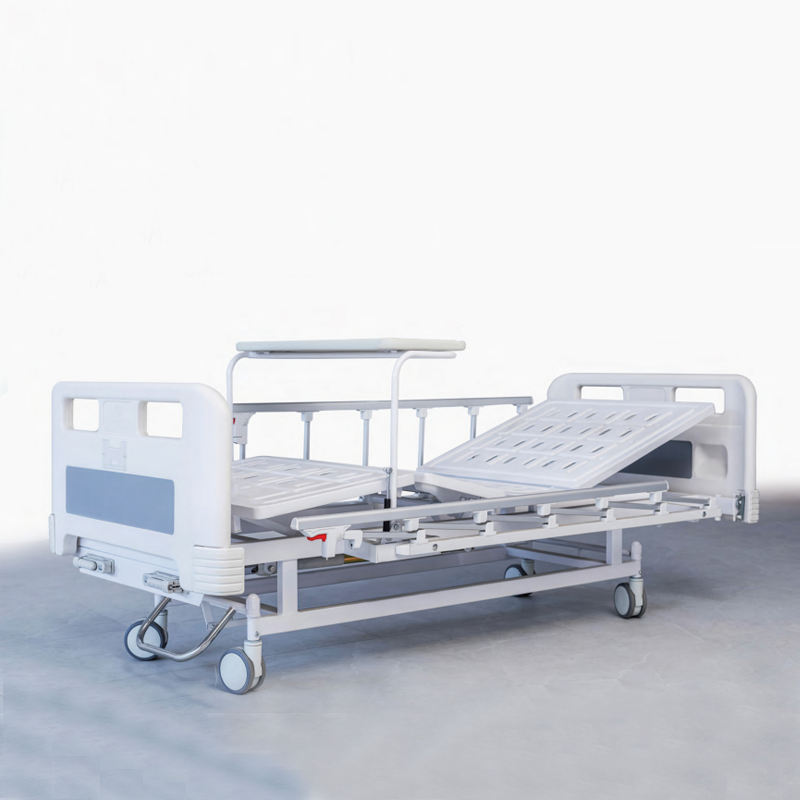

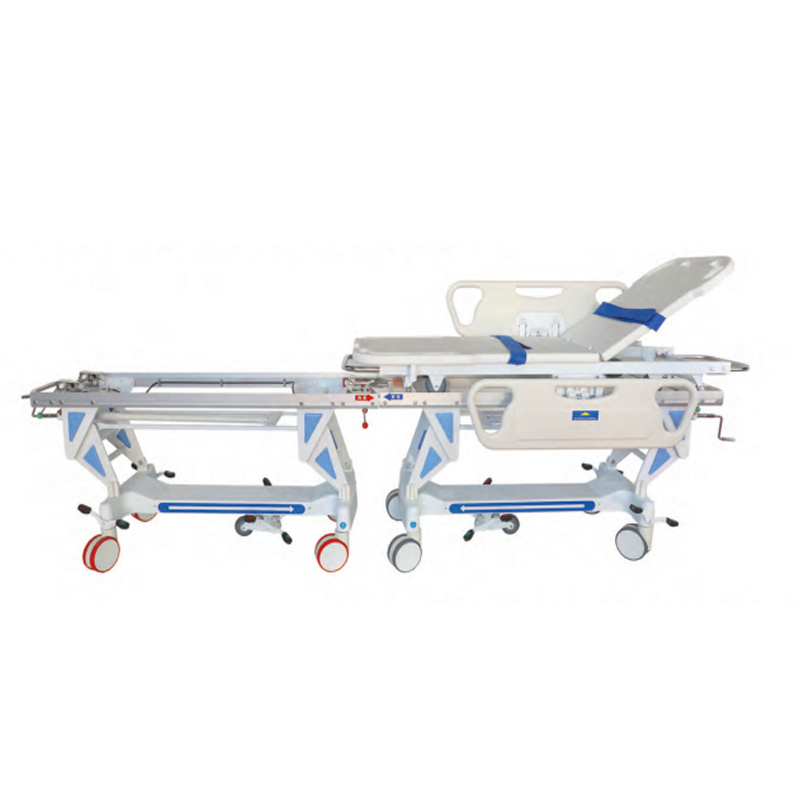
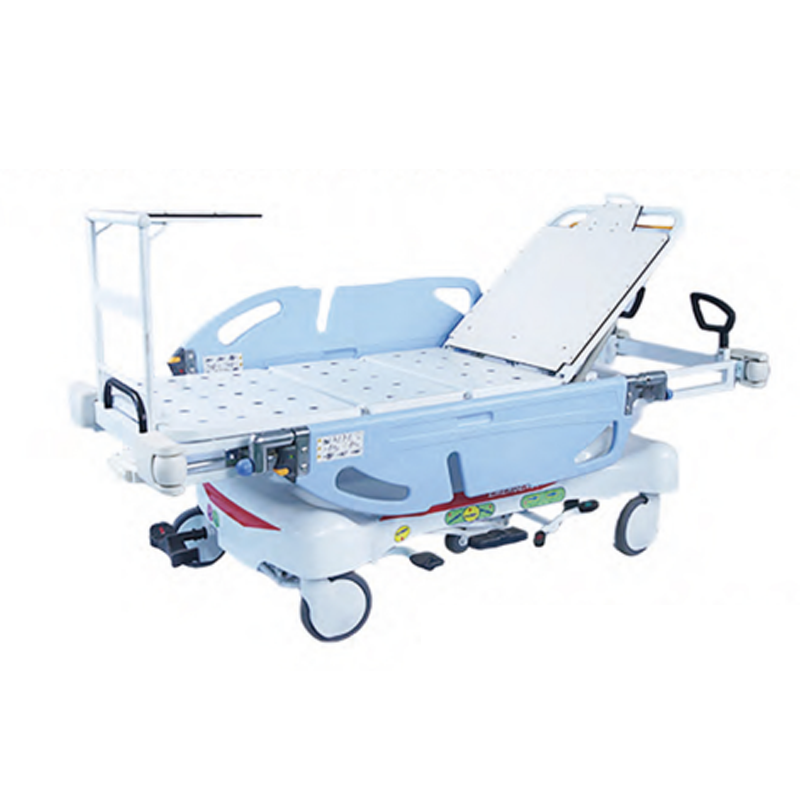
A manual hospital bed configured for rehabilitation applications functions as a dynamic therapeutic tool that actively supports the patient's recovery journey and functional reintegration. The bed's manual adjustability, achieved through precisely calibrated crank mechanisms, allows therapists and caregivers to position patients optimally for various therapeutic exercises, mobility training, and functional activities. The height adjustment feature is particularly crucial for facilitating safe and biomechanically correct transfers to and from wheelchairs or standing frames, while the articulation of backrest and knee break sections assists in gradual sitting tolerance training and specific therapy positioning. The smooth, controlled movement of a well engineered manual bed is especially beneficial for patients experiencing pain or limited mobility, as it allows gentle repositioning without electrical dependency. The bed incorporates sturdy side rails that provide necessary support for patients re learning bed mobility techniques. By enabling optimal and frequent positioning through reliable mechanical means, the manual rehabilitation bed helps prevent complications like muscle contractures and pressure sores, supports cardiovascular and respiratory function, and empowers patients to actively participate in their recovery process. This makes it an invaluable asset in rehabilitation hospitals, spinal injury units, stroke recovery centers, and physical therapy facilities where consistent, dependable performance supports progressive therapeutic goals and functional outcomes.